

The Reinvention of Medicine with AI, and What That Means for Health Policy
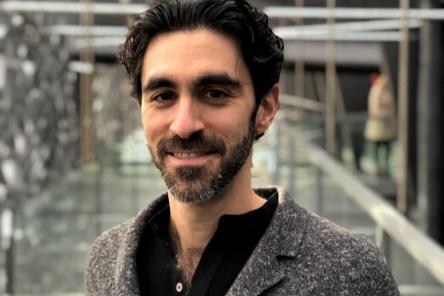
Ziad Obermeyer works at the intersection of medicine and AI, asking fundamental questions about how data can transform health and health care. He is Associate Professor and Blue Cross of California Distinguished Professor at UC Berkeley, and a founding member of the Berkeley–UCSF joint program in Computational Precision Health. His work helps doctors make better decisions, and helps researchers make new discoveries by 'seeing' the world the way algorithms do. The resulting algorithms are being deployed into real world settings, bridging the gap between computational innovation and patient care. His research on algorithmic bias, which culminated in testimony before Congress, changed how hospitals around the world use AI for population health, and how state attorneys-general hold AI accountable. Beyond academia, he co-founded Nightingale Open Science, a non-profit that democratizes access to medical imaging data, and Dandelion, a for-profit platform for AI innovation in healthcare. He is a Chan–Zuckerberg Biohub Investigator and a Research Associate at the National Bureau of Economic Research. TIME magazine named him one of the 100 most influential people in AI, and the National Academy of Medicine recognized him as an emerging leader. He practiced emergency medicine for 10 years, from academic hospitals to rural Arizona, and is now building a new kind of medical practice grounded in massive data collection and rapid experimentation. Before Berkeley, Obermeyer served on the faculty at Harvard Medical School and began his career as a consultant at McKinsey & Company.